Weather Alert in Alaska
High Wind Watch issued February 6 at 10:13AM AKST until February 8 at 11:00PM AKST by NWS Anchorage AK
AREAS AFFECTED: Central Aleutians
DESCRIPTION: * WHAT...Southeast winds 45 to 60 mph with gusts between 75 to 85 mph possible. * WHERE...Central Aleutians including Adak and Atka. * WHEN...From Sunday morning through Sunday evening. * IMPACTS...High winds could move loose debris, damage property, and cause power outages. Travel could be difficult. * ADDITIONAL DETAILS...Southeast winds begin to increase early Sunday morning for the Central Aleutians as a strong low pressure system with gusts potentially greater than 75 mph lifts northward out of the North Pacific. As the front passes over the area mid to late Sunday morning, winds shift dramatically from southerly to westerly. Wind speeds are likely to decrease late Sunday into early Monday. However, a second potentially stronger system starts to approach the area with more impacts for the latter half of Monday.
INSTRUCTION: A high wind watch means there is potential for a hazardous high wind event. Monitor the latest forecasts and warnings for updates on this situation. Fasten loose objects or shelter objects in a safe location prior to the onset of winds.
Want more detail? Get the Complete 7 Day and Night Detailed Forecast!
Current U.S. National Radar--Current
The Current National Weather Radar is shown below with a UTC Time (subtract 5 hours from UTC to get Eastern Time).

National Weather Forecast--Current
The Current National Weather Forecast and National Weather Map are shown below.

National Weather Forecast for Tomorrow
Tomorrow National Weather Forecast and Tomorrow National Weather Map are show below.

North America Water Vapor (Moisture)
This map shows recent moisture content over North America. Bright and colored areas show high moisture (ie, clouds); brown indicates very little moisture present; black indicates no moisture.

Weather Topic: What is Condensation?
Home - Education - Precipitation - Condensation
 Next Topic: Contrails
Condensation is the process which creates clouds, and therefore
it is a crucial process in the water cycle.
Condensation is the change of matter from a state of gas into a state of liquid,
and it happens because water molecules release heat into the atmosphere and
become organized into a more closely packed structure, what we might see as
water droplets.
Water is always present in the air around us as a vapor, but it's too small for
us to see. When water undergoes the process of condensation it becomes organized
into visible water droplets. You've probably seen condensation happen before on the
surface of a cold drink!
Next Topic: Contrails
Weather Topic: What are Cumulonimbus Clouds?
Home - Education - Cloud Types - Cumulonimbus Clouds
 Next Topic: Cumulus Clouds
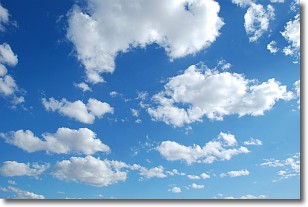
The final form taken by a growing cumulus cloud is the
cumulonimbus cloud, which is very tall and dense.
The tower of a cumulonimbus cloud can soar 23 km into the atmosphere, although
most commonly they stop growing at an altitude of 6 km.
Even small cumulonimbus clouds appear very large in comparison to other cloud types.
They can signal the approach of stormy weather, such as thunderstorms or blizzards.
Next Topic: Cumulus Clouds
Current conditions powered by WeatherAPI.com